
























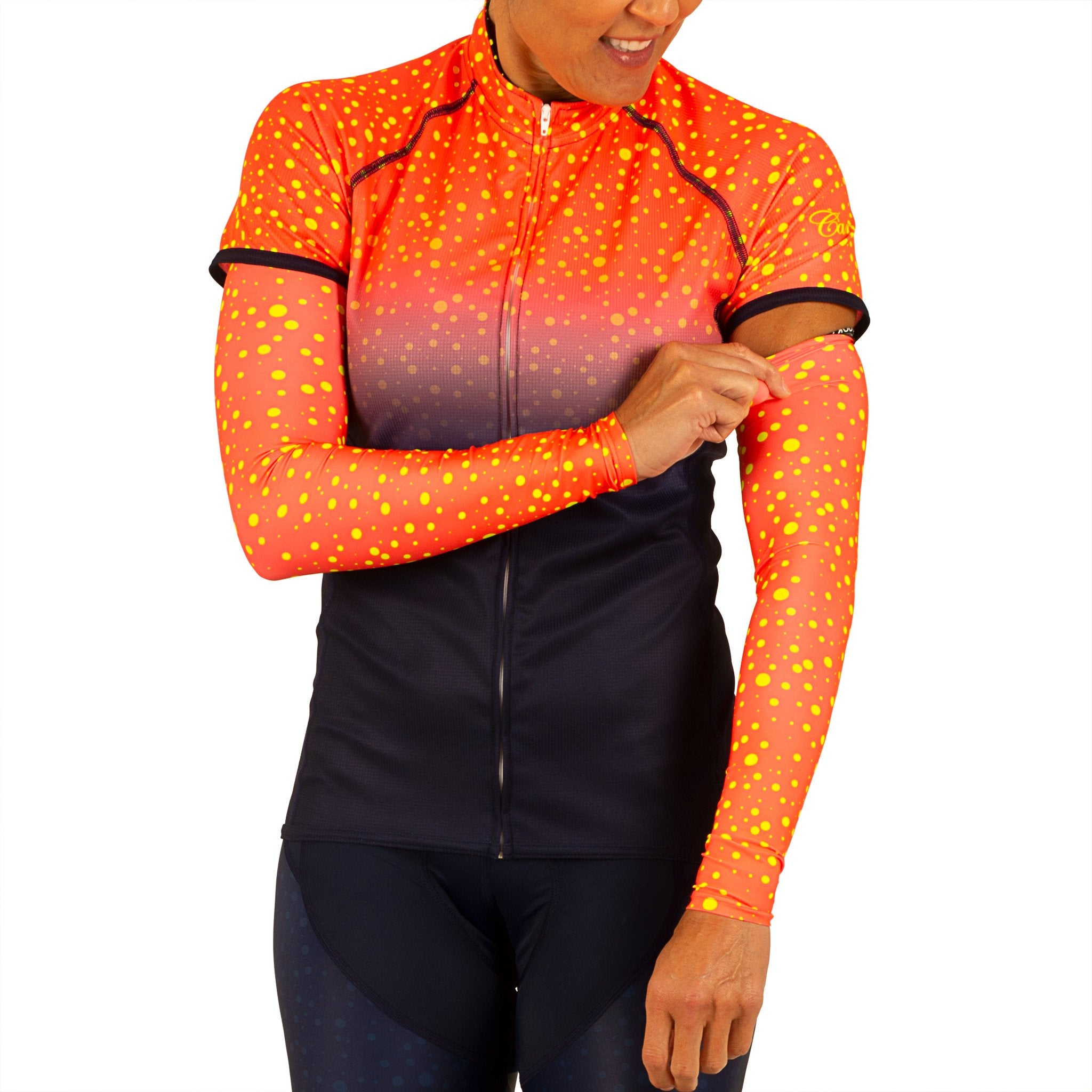


In cycling, the right fabric can make or break your ride. Stretch and recovery are key factors that ensure your gear stays comfortable, supportive, and durable. Here’s a quick breakdown of the top 5 fabrics used in cycling apparel and why they matter:
- Spandex: Offers exceptional elasticity and shape retention, ideal for tight-fitting gear like racing kits.
- Polyester: Moisture-wicking and durable, perfect for jerseys and outerwear.
- Nylon: Strong, abrasion-resistant, and lightweight, great for high-friction areas and rugged conditions.
- Merino Wool: Naturally temperature-regulating and odor-resistant, best for cold or variable weather.
- High-Performance Blends: Combine stretch, moisture control, and durability for all-around performance.
Quick Comparison
| Fabric | Stretch & Recovery | Moisture-Wicking | Durability | Best Use |
|---|---|---|---|---|
| Lycra/Spandex | Excellent | Moderate (when blended) | High | Tight-fitting, aerodynamic gear |
| Polyester | Moderate | Excellent | High | Jerseys, hot weather rides |
| Nylon | Good | Good | Excellent | Mountain biking, rough trails |
| Merino Wool | Moderate | Excellent | Moderate (blends improve durability) | Cold or variable weather |
| High-Performance Blends | Excellent | Excellent | High | Racing, long-distance rides |
Choosing the right fabric depends on your riding style, weather conditions, and comfort needs. Keep reading to learn how each fabric performs and when to use it.
1. Spandex
Spandex or elastane is a go-to material for cycling gear because of its impressive elasticity. It can stretch up to 500% and snap back instantly. Its molecular structure helps it maintain its shape, avoiding the sagging that often happens with lower-quality fabrics.
Moisture-Wicking Capabilities
Pure Lycra doesn’t wick moisture on its own, but when blended with hydrophobic fibers, it performs much better. For example, a polyester-Lycra blend can cut down moisture retention by about 40% compared to cotton-Lycra blends. This combination offers both stretch and improved moisture control.
Durability and Abrasion Resistance
The durability of Lycra depends on factors like its denier thickness and blend ratios. For instance, 140-denier Lycra-polyester blends can handle around 25,000 Martindale abrasion cycles, making them great for high-wear areas. Adding 200-denier panels in key spots can offer even more protection for tough riding conditions.
Best Uses in Cycling Conditions
Lycra shines in tight-fitting gear where aerodynamics are key. However, when temperatures dip below 50°F (10°C), layering becomes essential. For most cycling needs, Lycra content between 15% and 25% strikes the right balance of stretch, breathability, and moisture management.
Here’s a quick guide to Lycra content based on riding style:
| Riding Style | Lycra % | Purpose |
|---|---|---|
| Endurance | 18–22% | Balanced compression |
| Racing/Sprinting | 25–28% | Maximum stabilization |
| Recreational | 15–18% | Enhanced flexibility |
Next, we’ll look at other fabrics that complement Lycra and improve cycling performance in specific ways.
2. Polyester
Moisture-Wicking Abilities
Polyester does a great job of pulling sweat away from the skin, helping cyclists stay dry and comfortable during rides.
Strength and Resistance to Wear
Known for its strength, polyester stands up well to wear and tear. This helps cycling gear last longer, even in tough conditions, making it a dependable material for a variety of garments.
Ideal Cycling Applications
Thanks to its sweat-handling and durability, polyester is a go-to fabric for cycling apparel. It's especially suited for jerseys, shorts, and outerwear designed for challenging rides.
3. Nylon
After polyester, nylon stands out for its mix of stretch, durability, and moisture control.
Stretch and Recovery Properties
Nylon's semi-crystalline structure allows for 15–20% stretch while maintaining its shape. When blended 80/20 with spandex, it offers 4-way stretch and quick recovery, making it perfect for activewear.
Durability and Abrasion Resistance
Nylon is incredibly tough. With a tensile strength of 9.5 g/denier, it provides 40% better abrasion resistance than polyester. For example, 500D nylon can endure 710 abrasion cycles before failing, making it 14 times more durable than cotton. This makes it an excellent choice for high-friction areas.
| Durability Metric | Performance |
|---|---|
| Tensile Strength | 9.5 g/denier |
| Abrasion Cycles (500D) | 710 cycles |
| Tear Force (500D) | 22 lbs |
| Elasticity After 100 Washes | 85% retention |
Moisture-Wicking Capabilities
Nylon handles moisture well, absorbing only 4–4.5% water. With moisture-wicking treatments, it dries 35% faster than untreated materials, making it ideal for sweat-heavy activities.
Best Uses in Cycling Conditions
Nylon performs best in temperatures ranging from 40–80°F (4–27°C). Nylon-spandex cycling kits have been shown to lower skin temperature by 2.4°F during a one-hour ride compared to cotton, helping with thermal regulation. Additionally:
"Biomechanics studies show nylon-Lycra® blends reduce saddle sore risk by 18% compared to polyester, as tested by the Cycling Sports Group."
Thanks to its 20% better strength-to-weight ratio compared to polyester, nylon is lightweight yet durable. For mountain biking or gravel riding, reinforced 600D nylon can endure over 5,000 rub cycles without losing its structure.
At Canari Cycling Apparel, we use nylon blends designed for durability and performance, ensuring you stay comfortable on every ride.
sbb-itb-1992862
4. Merino Wool
Stretch and Recovery Properties
Merino wool's natural crimp allows it to stretch between 5–15% and recover 90–95% of its shape, making it ideal for snug base layers. Adding 15–20% elastane boosts its flexibility even further, enhancing its performance for activewear.
Moisture-Wicking Capabilities
Merino wool excels at managing moisture, absorbing up to 30% of its weight while still feeling dry. Its unique fiber structure also helps regulate temperatures effectively, ranging from 32°F to 68°F (0°C to 20°C).
| Performance Metric | Merino Wool | Standard Polyester |
|---|---|---|
| Moisture Absorption | 30% of weight | 1% of weight |
| Wicking Speed | 22% faster | Baseline |
| Odor Resistance | 30% better | Standard |
Durability and Abrasion Resistance
Modern Merino wool blends, which include 30–50% nylon, significantly improve durability without compromising comfort. According to the International Wool Textile Organization:
"Merino blends maintain shape and performance through 150+ wash cycles, with ultrafine 18.5-micron fibers providing non-itch comfort while preserving durability."
Best Uses in Cycling Conditions
Merino wool is a top choice for cycling in variable conditions, especially when dealing with temperature swings and long rides. Its natural insulation works particularly well in temperatures between 32°F and 60°F (0°C to 15°C). Key scenarios where it shines include:
- Cold Weather: Retains warmth up to five times better than cotton when damp.
- Multi-Day Tours: Excellent odor resistance reduces the need for frequent washing.
- Unpredictable Weather: Adapts to changing temperatures with its natural regulation.
Canari Cycling Apparel's Glacier Thermal collection takes advantage of these Merino blends, offering reliable insulation and durability for rides in temperatures below 50°F.
5. High-Performance Blends
These fabric blends are designed to provide excellent stretch and recovery, similar to Lycra. Canari's VUELTA fabric offers reliable two-way stretch and shape retention, giving you freedom of movement without compromising fit. This flexibility also supports effective moisture control, keeping you comfortable during your ride.
Moisture-Wicking Capabilities
Moisture management is a key feature of these blends. The ATLANTA fabric uses a dual-layer system: the inner layer pulls sweat away from the skin, while the outer layer promotes quick evaporation. This setup helps you stay dry and maintain an even temperature, even on long rides.
Durability and Abrasion Resistance
Priflex fabric is built to last. It resists abrasion, minimizes pilling, and holds up well after multiple washes. This durability ensures your cycling gear stays reliable and performs consistently over time.
Best Uses in Cycling Conditions
Thanks to their advanced stretch, moisture management, and durability, these fabrics are ideal for a range of cycling scenarios:
- Competitive Racing: VUELTA fabric provides the support needed for sprints and climbs.
- Long-Distance Rides: Moisture-wicking properties help prevent discomfort and chafing.
- Changing Weather: These materials maintain their performance in different conditions.
Canari’s Pro Elite series incorporates these high-performance fabrics in key areas, offering cyclists the comfort, flexibility, and durability required for demanding rides and extended journeys.
Conclusion
The fabric you choose for cycling gear plays a key role in both performance and comfort. Different materials are better suited for specific cycling styles and conditions.
For Road Cycling: Fabrics like Lycra and high-performance blends are ideal, offering lightweight and aerodynamic properties. Materials such as VUELTA stand out for their excellent stretch and recovery, helping riders maintain an aerodynamic posture.
For Mountain Biking: Durability is crucial on rough trails. Nylon-based fabrics and blends like Priflex are excellent choices, providing abrasion resistance without sacrificing flexibility.
For Long-Distance Rides: Comfort and moisture control are essential for extended rides. Materials like Merino wool and advanced options like ATLANTA help regulate temperature, keeping you comfortable over long distances.
When selecting cycling apparel, match fabric features to your riding needs:
- Identify your cycling discipline
- Assess weather conditions
- Factor in ride duration
A well-rounded wardrobe with a variety of fabrics ensures you're prepared for any ride. For example, polyester jerseys are great for hot summer days, while Merino wool is perfect for cooler temperatures. Versatile blends like VUELTA and ATLANTA work across different seasons and cycling styles.
Choosing the right fabric enhances your ride by providing the comfort and durability you need.
FAQs
What’s the best fabric for cycling gear based on stretch, recovery, and riding conditions?
Choosing the right fabric for your cycling gear depends on your riding style, conditions, and personal preferences. Look for fabrics that offer excellent stretch and recovery to ensure a snug yet flexible fit, especially for long rides or intense training sessions.
For optimal performance, consider materials like Lycra or spandex blends, which provide superior elasticity and comfort. If you're cycling in cooler weather, thermal fabrics with stretch properties can help keep you warm without restricting movement. Additionally, lightweight, moisture-wicking fabrics are ideal for hot and humid conditions to keep you dry and comfortable.
Brands like Canari Cycling Apparel craft high-performance gear using premium fabrics designed for durability, comfort, and style, ensuring you stay supported no matter the terrain or weather.
What makes high-performance fabric blends better than single-material options for cycling apparel?
High-performance fabric blends are designed to combine the best qualities of multiple materials, offering cyclists an optimal balance of stretch, durability, moisture-wicking, and comfort. These blends adapt to a rider's movements, ensuring a snug yet flexible fit that improves performance and reduces discomfort during long rides.
Unlike single-material options, fabric blends often provide enhanced breathability and recovery properties, keeping you cool and ensuring the garment retains its shape over time. This makes them ideal for cycling gear, where both performance and longevity are essential.
Why is moisture-wicking important in cycling apparel, and which fabrics are best for it?
Moisture-wicking is essential in cycling apparel because it keeps riders dry and comfortable by pulling sweat away from the skin. This prevents discomfort and chafing, especially during long or intense rides, while also helping to regulate body temperature.
Fabrics like polyester blends and technical materials designed for performance excel in moisture-wicking. Canari Cycling Apparel incorporates advanced fabrics into its gear, ensuring optimal comfort, durability, and performance for every ride.


